The Case for Real-Time AI Conversation Auditing. Why Post-Call Analysis Is No Longer Enough
Most QA happens after the call ends. But what if you could fix problems while the call is happening? Real-time AI auditing helps teams: ✔ Prevent compliance failures ✔ Rescue struggling conversations ✔ Coach agents instantly The biggest shift in customer operations isn’t automation. It’s timing.
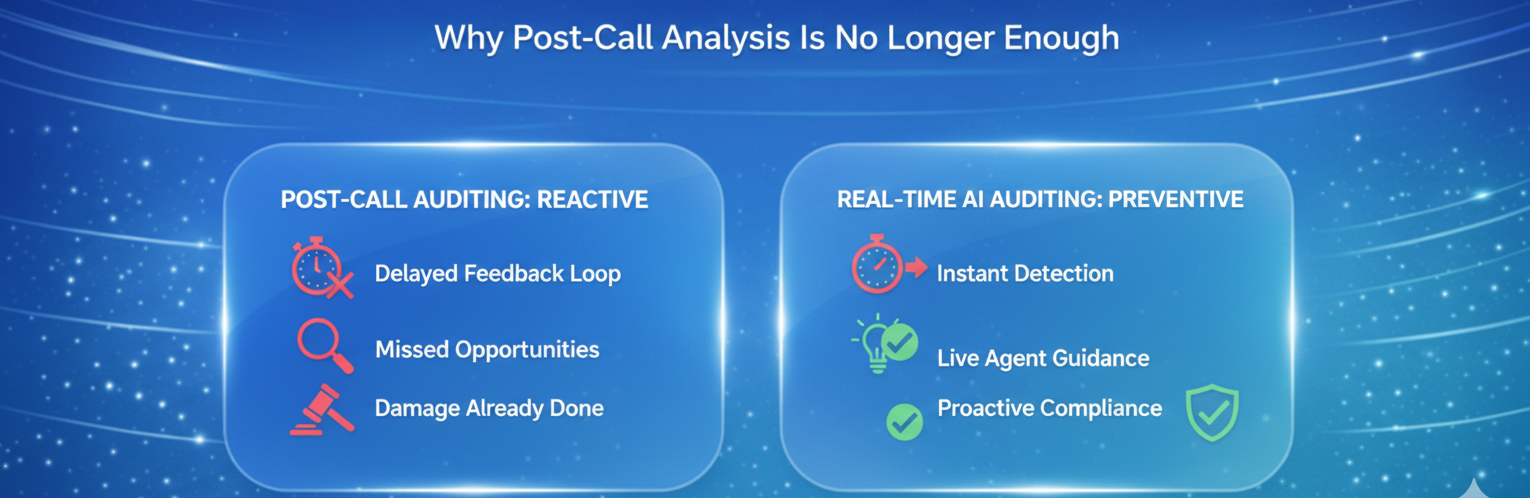
Traditional QA reviews conversations after they happen. But by then, the damage is already done.
Customers have churned. Compliance breaches have occurred. Sales opportunities have been lost.
Real-time AI auditing shifts the model from reaction to prevention.
The Difference Between Monitoring and Intervention
Post-call auditing answers:
-
What went wrong?
-
Who needs coaching?
-
Which calls violated policy?
Real-time auditing answers:
-
What is happening right now?
-
Can we fix it before it ends?
-
Can we guide the agent mid-conversation?
This timing shift is transformational.
What AI Can Detect During a Live Conversation
Modern conversation AI identifies:
Compliance Risks
-
Missing mandatory disclosures
-
Incorrect wording in regulated statements
-
Incomplete identity verification
Customer Experience Signals
-
Rising frustration
-
Repetition indicating confusion
-
Long silences or disengagement
Sales Performance Indicators
-
Hesitation during closing moments
-
Weak responses to objections
-
Missed upsell opportunities
What Organizations Can Do With Real-Time Insight
- Provide Live Agent Guidance
Agents can receive prompts such as:
-
“Confirm consent statement”
-
“Customer asked about cancellation — clarify retention options”
-
“Offer next step to close”
These micro-interventions can dramatically change outcomes.
- Enable Supervisor Intervention
Supervisors can step in when:
-
Conversations escalate emotionally
-
Compliance risk appears
-
High-value customers show churn intent
Instead of reviewing failures later, they prevent them immediately.
- Protect Compliance Before It Becomes a Problem
Regulatory breaches often happen because agents forget or misstate information.
Real-time alerts reduce this risk by ensuring critical statements are delivered correctly.
The Strategic Shift: From Forensics to Prevention
Traditional QA is investigative. Real-time QA is protective.
Instead of analyzing past conversations, organizations actively shape current ones.
That shift doesn’t just improve efficiency. It changes outcomes.